Introduction
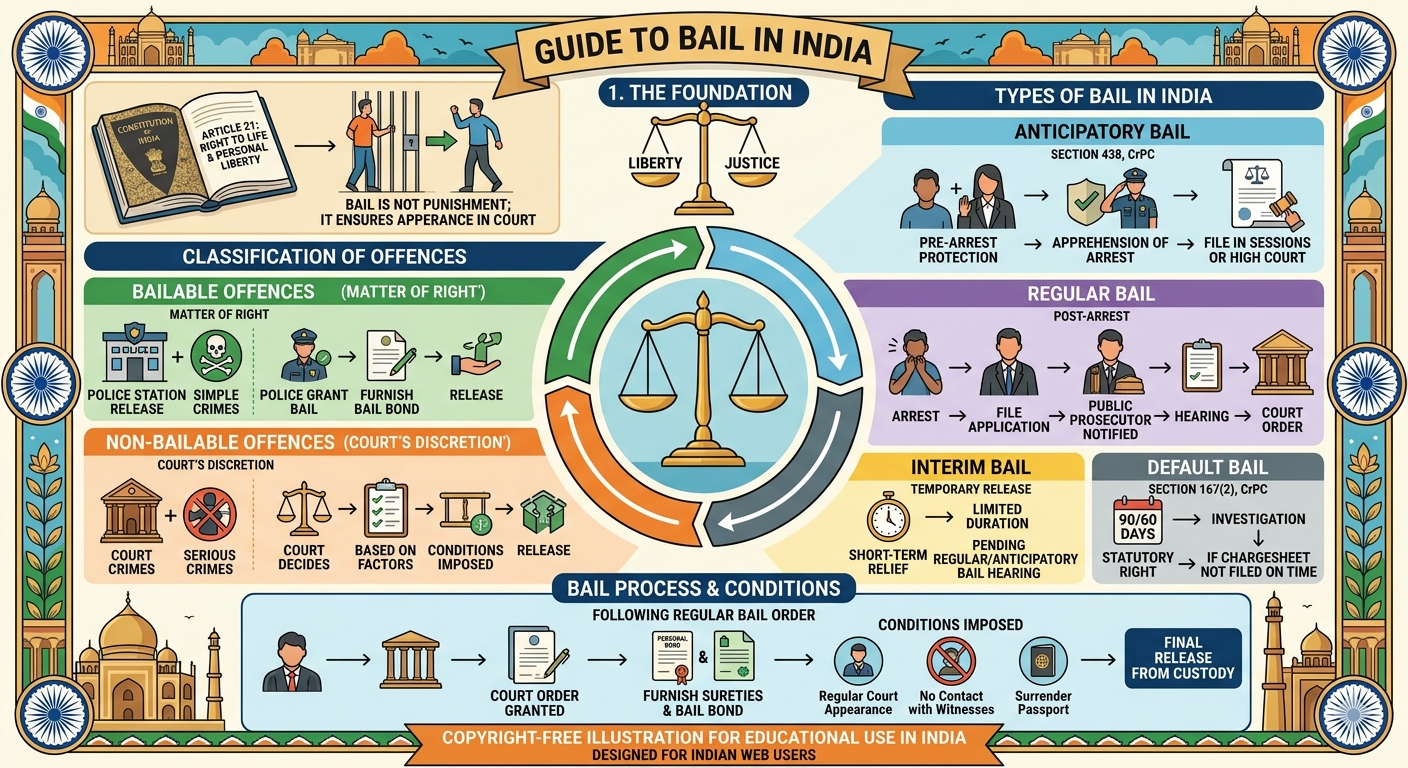
Bail is a legal process that allows an accused person to remain out of custody while legal proceedings continue. Understanding how bail works helps individuals protect their legal rights during criminal cases.
What Is Bail?
Bail is permission granted by the court allowing an accused person temporary release from custody under certain conditions.
Types of Bail in India
Regular Bail
Granted after arrest in non-bailable offences.
Anticipatory Bail
Applied before arrest when a person fears arrest.
Interim Bail
Temporary bail granted for a short duration.
Factors Courts Consider Before Granting Bail
- seriousness of offence
- criminal history
- evidence available
- possibility of absconding
- cooperation with investigation
Why Hiring a Criminal Lawyer Is Important
Experienced criminal lawyers:
- prepare bail applications
- argue before court
- protect legal rights
- guide clients through procedures
Documents Required for Bail
- FIR copy
- identity proof
- arrest documents
- supporting legal papers
Conclusion
Understanding bail procedures helps individuals respond properly during criminal proceedings. Professional legal representation significantly improves legal guidance during bail matters.